

Have you sustained a head injury or concussion? Are you experiencing difficulty completing daily tasks, fatigue, headache, dizziness, imbalance, fatigue, sensitivity to light or noise, difficulty with concentrating or with memory?
If so, you may benefit from Concussion Rehabilitation.
How does a is head injury, concussion or TBI occur?
- The head strikes a stationary object (ex. a fall where the head impacts the ground or hitting the head on an object during an auto accident).
- An object hits the head (ex. a stick, ball during a sporting activity)
- A quick acceleration/ deceleration of the head with no contact with any surface. This can occur during sporting events (ex. a dancer or gymnast who completes a rapid movement) or during a motor vehicle accident (ex. whiplash injuries).
These events all cause quick deceleration of the head and shifting of delicate brain tissue inside the skull. The brain tissue can stretch, tear or shear leading to tissue damage, chemical imbalances and metabolic imbalances. An energy crisis starts to occur in the brain as it attempts to maintain its usual energy output to keep a person’s vision, inner ear, other balance systems, musculoskeletal, emotional and cognitive pathways going while it also trys to heal. This lack of energy available to these systems results in the symptoms that a person can experience.
Concussion symptoms can include:
- Headache
- Blurry vision
- Dizziness
- Fatigue
- Drowsiness
- Sensitivity to light and/or noise
- Balance impairments
- Nausea or vomiting
- Difficulty with cognitive tasks
- Trouble thinking clearly, trouble finding works, feeling slowed down, difficulty with concentration, difficulty with memory
- Change in emotional state
- Feeling easily irritated, sadness, more emotional, nervousness or anxiety
- Sleeping more or less than usual, trouble falling asleep
How Do I Know If I’ve Had a head injury, concussion or TBI?
There is no single diagnostic test that can currently detect the presence of a concussion. Concussion injury does not appear on routine brain scans such as MRI or CT. A diagnosis of concussion is made based on the group of symptoms that can become present immediately after injury or may arise over weeks to months post injury. Acute symptoms can be present from seven to ten days post injury. The natural recovery of a concussion occurs within the first seven to ten days post injury, with nerve signals can take up to 30 days post injury to continue to resolve. After ten days it can be safe to and have benefit to begin rehab with a program that matches the patient’s current symptoms and abilities.
Symptoms that linger longer than 30 days can be due to complexities associated with other injuries sustained during the injury (whiplash, upper extremity sprain/strains), other conditions (such as migraine, motion sensitivity, visual disturbances, previous history of other head injuries), and if the brain has not found a way to deal with healing all the pathways. Fortunately, Concussion rehabilitation is available at Global Physiotherapy in Sherwood Park, AB.
Safety note: If a person develops sings of a neurological injury (repeated vomiting, seizures, loss of consciousness, slurred speech, confusion or unequal pupil size) they should seek out immediate medical attention to rule out serious brain trauma. If a concussion is suspected during a sporting activity the athlete or child should be removed from play and monitored. Medical clearance is often required to legally return to play.
How is head injury or Concussion treated?
Concussion Rehabilitation is a form of physiotherapy that focuses on addressing various symptoms and promoting a safe return to activity. This is achieved through using a Global assessment and treatment approach. This involves a thorough discussion about the injury, current symptoms and medical history. A comprehensive objective exam looking at all the different systems that can be impacted by a head injury is completed as well.
The objective (physical) exam may include different combinations of testing such as:
- Neurological testing
- Balance/ coordination testing
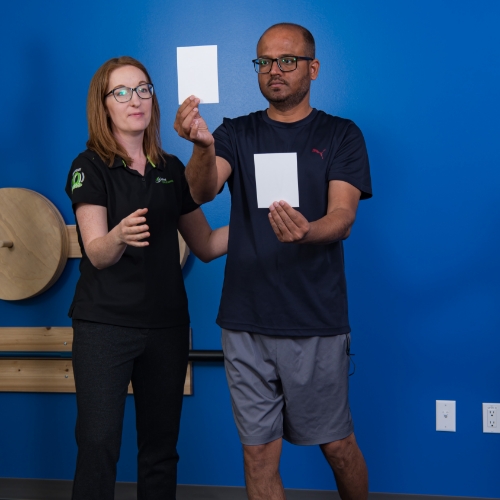
- Visual Motor Screening
- Vestibular/ balance testing
- Gait assessment
- Orthopaedic assessment of secondary injuries (ex. Neck, shoulder, upper back, jaw)
- Cognitive Health assessment
A variety of rehabilitation methods may be used to treat the various systems that can be impacted by a head injury. Treatment programing will depend on the objective exam findings and presentation of symptoms of each individual patient. However, treatment will always include patient education! Explaining what was found on assessment, the causes behind your symptoms, how we can address them and how we can achieve your goals will be discussed.
Treatment could also focus on any or a combination of the following:
- Orthopaedic treatment of neck, shoulders, upper back, jaw and related headaches. This can include manual therapy, dry needling, acupuncture and exercise prescription to improve range of motion, strength, decrease pain, promote tissue healing.
- Vestibular– Ocular Rehabilitation to alleviate symptoms of dizziness, imbalance due to the interconnected eye and inner ear systems not functioning well post concussion. These systems help tell us where we are in space and about our surroundings. When these systems are not working well it can cause intolerance to motion, busy spaces (ex. Grocery stores) and difficulty to carry out visual activities (ex, reading, writing). In clinic and home exercise programing focuses on retraining the brain pathways to restore function and decrease symptoms.
- Exercise and Activity- Based Rehabilitation- Research is suggesting that gentle paced aerobic exercise or activity initialed in the early stages of after a concussion can have great benefits. It does need to be applied at an appropriate level and activity. This would be apart of your post Concussion treatment plan and in clinic/ home exercise programing.
- Strategies for daily activities, cognitive health support- recommendations for schedule regulation, daily life activities, return to sport participation or other activities would be discussed and implemented.
- Communication with other health care providers and potential referral, if required, to address all aspects of post concussion recovery (examples can include Occupational Therapy for further cognitive therapy, Psychology for mental health, Optometry for further vision therapy, and/or medical referral to your physician).